How to Keep Your Garage Dry? The Ultimate Guide to Beating Humidity and Heat
March 12, 2026
Moiswell Team
Hot and humid weather can turn your garage into a steam room—high temperatures combined with excessive moisture not only make the space feel unbearable but also accelerate metal corrosion and mold growth. So, how do you keep your garage cool and dry? The key lies in controlling both humidity and heat: limiting heat entry, enhancing ventilation, and effectively removing excess moisture. According to the U.S. Department of Energy, managing humidity directly improves perceived comfort and cooling efficiency in hot climates. Today's guide explains why garages trap heat and moisture and provides practical tips to keep your garage cool in sweltering conditions.
Why Do Garages Trap Heat and Moisture?

Garages tend to heat up quickly and cool down slowly for several reasons, including:
● Persistent High Temperatures: In hot regions, outdoor temperatures remain high year-round. This causes garage doors, walls, and roofs to absorb and store significant amounts of heat. Metal components and concrete floors slowly release this stored heat, keeping temperatures elevated well into the night.
● Moisture Intrusion: Humid air enters through garage doors, wall gaps, and shared walls with the house. In many areas, average relative humidity often exceeds 70%. Once this moist air enters an enclosed garage, indoor humidity levels rise rapidly.
● Poor Ventilation and Insulation: Most garages lack active air exchange systems and ceiling insulation. When hot, humid air becomes trapped inside, the space can feel even hotter than the outdoors.
● Heat Sources: Freshly parked hot cars bring in significant heat, further increasing the temperature.
How to Keep Your Garage Cool and Dry?
Here are seven tips to keep your garage comfortable without breaking the bank. Some of these cost absolutely nothing.
1. Improve Natural Airflow
Natural ventilation allows trapped heat to escape without adding mechanical strain. Vents in the roof and walls can release rising hot air, reducing heat buildup near the ceiling.
Vent placement must allow air to exit without pulling in excessive outdoor moisture. According to building science research, passive venting can lower surface temperatures, but it cannot manage humidity on its own.
This method aids cooling but works best when combined with humidity control (e.g., using a dehumidifier).
2. Add Mechanical Ventilation
When garages need forced airflow or lack windows, mechanical ventilation provides stable air circulation. Exhaust fans pull out hot air and introduce outdoor air at a controlled rate. This tip is crucial for those wondering "how to cool a garage with no windows."
However, relying solely on ventilation can increase indoor humidity during peak moisture hours. Professionals recommend using fans only during cooler, less humid times like evenings or early mornings.
3. Control Humidity with a Dehumidifier
Humidity control is the most critical factor for improving comfort in a garage. Humid air traps heat and slows evaporation from skin and surfaces. Removing moisture makes the air feel cooler and drier, even without lowering the temperature.
Running a dehumidifier in your garage balances relative humidity and prevents condensation on tools, walls, and vehicles.
4. Insulate the Garage Door and Ceiling
Heat initially enters the garage through the ceiling and door. An insulated garage door reduces radiant heat from the sun and slows heat exchange. Ceiling insulation prevents attic heat from transferring downward.
Insulation can reduce heat buildup in attached garages by up to 20%. More importantly, it boosts cooling efficiency but works best when paired with humidity control.
5. Seal Gaps That Let Heat and Humid Air In
Unsealed openings around outlets, door frames, and wall joints allow hot, moist air to infiltrate constantly. Sealants and weatherstripping block these paths and reduce humidity intrusion.
Sealing gaps reduces the cooling load and enhances the efficiency of your dehumidifier by preventing continuous re-entry of damp air.
6. Use Fans the Right Way
Fans only improve comfort after humidity is under control. Moving humid air without extracting moisture can increase discomfort and spread condensation.
Professionals recommend running a dehumidifier first to lower the garage's humidity, then using fans to distribute the drier air evenly. This sequence enhances the perception of coolness without raising humidity levels.
7. Manage Heat Sources Inside the Garage
Internal heat sources can rapidly raise temperatures in an enclosed garage. Power tools, engines, water heaters, and dryers all release heat and moisture. Allow vehicles to cool down before closing the garage door.
Limit the use of heat-generating tools during peak afternoon hours. This step minimizes heat gain and supports overall cooling efforts.
Smart Placement for Maximum Effect
Proper placement determines how effective your cooling and dehumidifying efforts will be.
Where to Place a Dehumidifier in a Garage?
Install the dehumidifier near the center of the garage or close to the main moisture source—for example, near the garage door or the shared wall with the house. This allows the unit to draw damp air evenly from the entire space.
Avoid placing the unit directly against shelves, walls, or vehicles, as restricted airflow reduces efficiency.
Keep Airflow Paths Clear
Ensure unobstructed intake and exhaust areas around your dehumidifier and ventilation fans. Restricted airflow traps hot, humid air in corners, leading to uneven cooling. Smooth air circulation allows heat and moisture to escape quickly, improving overall comfort.
Avoid Corners and Dead Zones
Corners tend to accumulate stagnant, humid air. Position equipment away from tight corners to prevent moisture buildup. This strategy enhances air mixing and prevents localized corrosion or mold growth.
Why Moiswell is the Smart Choice for Garage Dehumidification to Keep Your Garage Cool and Dry?
In extremely hot and humid regions, choosing a truly reliable dehumidifier is essential. Here are the core advantages of the Moiswell Defender Series:
Ample Capacity Redundancy: Offers over 30% more dehumidifying capacity compared to units in the same price range, ensuring the equipment doesn't need to run at full load constantly, leading to a longer lifespan and more stable humidity control.
Easy Maintenance: Features a front-access panel design. Filters and control boards can be easily replaced without moving the entire unit, reducing maintenance time by over 50%.
5-Year Limited Warranty: Our confidence in our product is reflected in our long-term commitment to our customers.
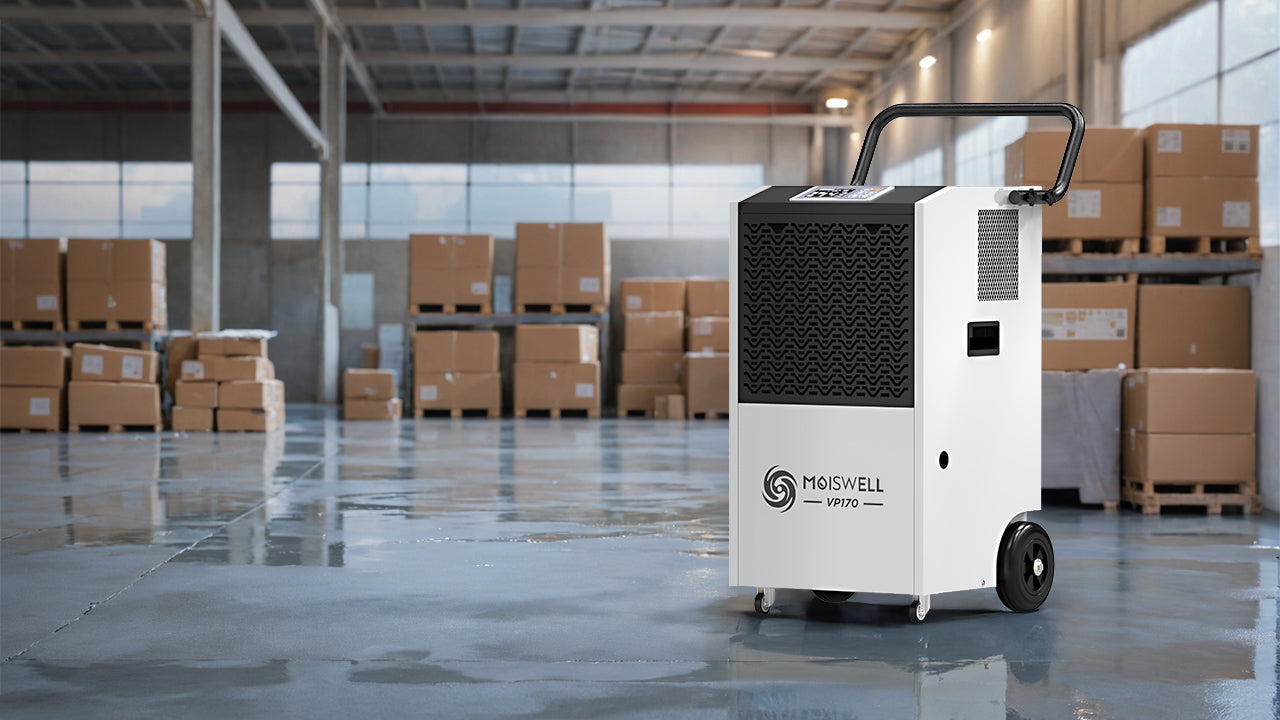
Optimize your meat processing environment with the Moiswell VP170—and elevate your standards of quality and hygiene.
Conclusion: Invest in Long-Term Peace of Mind
High temperatures can make enclosed spaces difficult to manage, but with the right approach, you can create a cooler, more functional environment. When you reduce humidity with a dehumidifier and combine it with proper ventilation and insulation, your heat control efforts become far more effective.
Don't let humidity and heat affect your quality of life. Visit the Moiswell website today to explore our full range of dehumidifiers designed specifically for garages.