What Happens When You Don’t Control Crawl Space Moisture in Humid Climates?
August 21, 2026
Moiswell Team
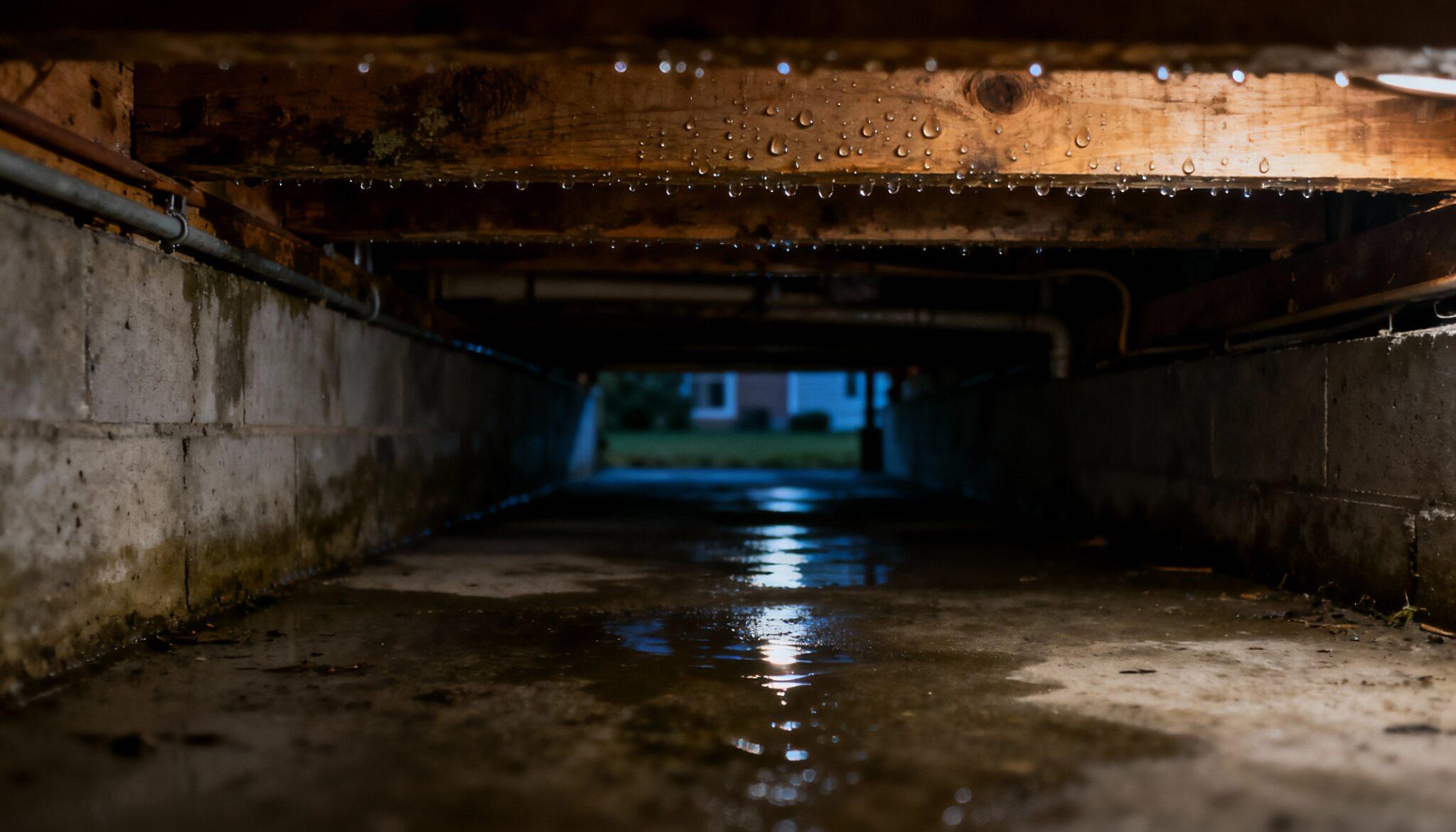
Crawl spaces are particularly vulnerable to moisture in warm, humid regions. Outdoor air, ground moisture, plumbing leaks, and condensation can all contribute to elevated humidity below your home. Without proper moisture management, a damp crawl space can gradually develop mold, musty odors, wood damage, and other problems that may eventually affect the living areas above.

Why Are Crawl Spaces So Humid?
Humid Outdoor Air
In humid climates, bringing outdoor air into a crawl space through traditional vents doesn't necessarily make the space drier. When warm, moisture-rich air enters a cooler crawl space, the relative humidity can rise and condensation may develop on pipes, ducts, joists, and other cool surfaces.
This is why ventilation alone may not provide adequate moisture control in consistently humid regions.
Ground Moisture
Moisture from the soil beneath a home can evaporate into the crawl space. An exposed dirt floor can therefore contribute significantly to elevated humidity, particularly after heavy rainfall or in areas with naturally damp soil.
Installing a properly sealed vapor barrier or encapsulation system can help reduce this source of moisture.
Water Intrusion and Drainage Problems
Poor exterior drainage, foundation leaks, plumbing problems, and groundwater can introduce additional moisture. Before relying on ventilation or dehumidification, these sources should be identified and corrected whenever possible.
What Can Happen If Crawl Space Humidity Stays High?
Mold and Mildew Growth
Persistent moisture creates favorable conditions for mold and mildew. Growth may appear on wooden joists, insulation, foundation surfaces, or stored belongings and is often accompanied by a noticeable musty smell.
Keeping the crawl space dry helps make the environment less favorable for recurring mold problems.
Wood and Structural Damage
Wood naturally absorbs moisture from humid air. When floor joists, beams, and subflooring remain damp for long periods, they can swell, warp, or eventually decay.
Because these materials form part of the home's structure, controlling moisture in the crawl space is an important part of long-term property protection.
Uncomfortable Indoor Conditions
A damp crawl space doesn't always remain an isolated problem. Moisture and odors can migrate into other parts of the building through gaps and air movement, potentially contributing to uncomfortable indoor conditions.
Managing humidity below the home can therefore support better moisture control throughout the building.
Is Ventilation Enough in a Humid Climate?
Ventilation can be useful under the right conditions, but more ventilation isn't always better. If outdoor air contains more moisture than the crawl space air, opening vents may introduce additional humidity rather than remove it.
For homes in persistently humid climates, a more comprehensive approach may include improving exterior drainage, controlling groundwater, sealing unwanted air leaks, installing a vapor barrier or encapsulation system, and actively managing humidity.
The right strategy depends on the crawl space design, local climate, and source of the moisture.
When Should You Consider a Crawl Space Dehumidifier?
If humidity remains high after major sources of water intrusion have been addressed, a dedicated crawl space dehumidifier can provide more consistent moisture control.
Unlike passive ventilation, a dehumidifier actively removes moisture from the air and can automatically cycle on and off according to the selected humidity setting. This makes it particularly useful for encapsulated crawl spaces and homes located in areas with long periods of warm, humid weather.
For larger or persistently damp spaces, a purpose-built unit such as the Moiswell Defender M145 provides up to 145 pints/day of moisture removal (Max.) and 70 PPD at AHAM, along with 265 CFM airflow. Its compact horizontal design also makes it suitable for low-clearance crawl spaces and tight basement areas.
Creating a Long-Term Moisture Control Strategy
Keeping a crawl space dry usually requires more than addressing a single factor. Start by fixing leaks and drainage problems, prevent unnecessary ground moisture from entering the space, and evaluate whether outdoor ventilation is appropriate for your climate.
If humidity continues to remain elevated, active dehumidification can help maintain more stable conditions with less dependence on changing outdoor weather. Combining these measures provides a more reliable approach to protecting the crawl space—and the home above it—from long-term moisture damage.
Skipping effective crawl space moisture management in a humid region can eventually lead to mold, odors, condensation, and damage to wooden building materials. Rather than relying on ventilation alone, consider the entire moisture-control system.
By addressing water intrusion, limiting ground moisture, controlling outside air, and using a crawl space dehumidifier when necessary, you can create a drier and more stable environment beneath your home throughout the year.